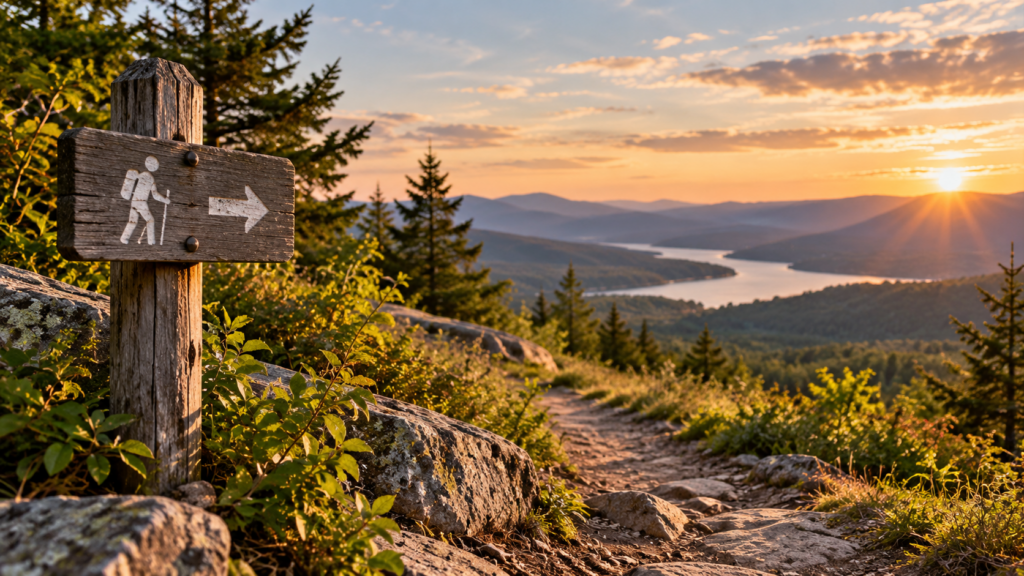
A trail is easier to follow when you have some idea where it is going.
The same is true of citizenship. Becoming more thoughtful, more careful, and harder to manipulate is worthwhile in itself. But that is not the whole point. We practice those habits because the quality of our citizenship helps shape the quality of our country.
The hope is that better citizens can help build a better country—one more worthy of its best possibilities. Not a country without disagreement, conflict, or failure, but one more capable of living up to its ideals, correcting its mistakes, and expecting more from both its leaders and its citizens.
That raises a useful question: How would we know if we were actually getting somewhere?
What would progress look like?
Probably not agreement.
A healthy country will still argue about taxes, spending, immigration, education, abortion, the environment, foreign policy, and a hundred other questions. People will continue to bring different experiences, values, interests, and judgments to those debates.
That is not necessarily a sign that citizenship has failed. In a democracy, disagreement comes with the territory.
Progress would look different.
It would mean more of us trying to understand before reacting. More willingness to distinguish evidence from assertion. More consistency in the standards we apply to people we support and people we oppose. More ability to change our minds when the facts require it. Less eagerness to reward humiliation, cruelty, or deliberate deception simply because they are aimed at the other side.
It would also mean expecting more from public life itself: leaders who understand that winning does not excuse everything, institutions capable of correcting mistakes, and citizens willing to defend important standards even when doing so is inconvenient.
None of that would eliminate conflict. Nor would it guarantee good outcomes.
But it would improve the conditions under which a self-governing country makes its choices.
And that may be one useful way to think about civic progress: not as reaching some final state of national agreement, but as becoming better able to make difficult decisions together—and better able to recognize when we are falling short.
What kind of citizens help us get there?
Not perfect ones.
Citizenship does not require encyclopedic knowledge, constant political attention, or certainty about every issue. Most of us are busy, limited, occasionally mistaken, and influenced by loyalties we do not always notice.
The more realistic goal is to become a little more thoughtful, a little more consistent, and a little harder to manipulate.
That begins with paying attention to how we form judgments.
Are we checking claims before repeating them? Are we more skeptical of information that flatters our existing beliefs? Are we willing to distinguish what we know from what we merely suspect? Can we admit when the evidence has changed?
It also means applying our standards more consistently.
Cruelty does not become admirable because it comes from our side. Dishonesty does not become harmless because it advances a cause we support. Conduct that would trouble us in an opponent should not suddenly become acceptable in an ally.
And it means resisting the temptation to reduce people to political categories.
We can strongly oppose an idea, a policy, or a public figure without assuming that everyone who sees the matter differently is stupid, selfish, or malicious. Good judgment requires distinctions—between bad ideas and bad people, between ordinary disagreement and genuinely dangerous conduct, and between mistakes that deserve correction and actions that demand a stronger response.
None of these habits guarantees wisdom.
But they make wisdom more likely.
And multiplied across millions of citizens, they help shape what kinds of arguments succeed, what kinds of leaders are rewarded, and what kinds of behavior become normal in public life.
What might progress look like in practice?
Usually, not like a dramatic breakthrough.
More often, it would show up in smaller choices.
We pause before sharing a claim that confirms what we already believe.
We ask a better question instead of reaching for the quickest answer.
We notice when a public figure we support crosses a line we would condemn in someone else.
We decide that being fair to an opponent does not require weakening our own convictions.
We change our minds when the evidence gives us a good reason to.
We resist the pleasure of seeing someone humiliated simply because we dislike their politics.
And when something genuinely serious happens, we are able to recognize that too. Steadiness does not mean treating every controversy as ordinary or every violation as just another partisan dispute. Sometimes good citizenship requires a clearer judgment and a stronger response.
These are modest signs. Most will never make the news.
But they matter because public life is shaped not only by elections, institutions, and leaders, but also by what citizens come to accept, excuse, demand, and reward.
A healthier civic culture begins to take shape when better habits become more common—and when worse habits stop paying such reliable dividends.
We do not control the whole trail
Most of us will never know exactly how much difference our individual choices make.
We cast a vote, speak up, stay silent, share something, challenge something, change our minds, or help someone else reconsider. Then the larger country keeps moving in ways no one person can control.
That can make citizenship feel frustratingly small.
But self-government has always depended on countless small judgments accumulating over time. What citizens tolerate matters. What we reward matters. What we refuse to excuse matters. So does what we are willing to learn, reconsider, defend, and demand.
None of us determines the direction alone.
But neither are we merely passengers.
The habits we bring to public life help shape the arguments that gain traction, the behavior that becomes acceptable, the leaders who earn support, and the standards institutions are expected to uphold.
We do not control the whole trail.
But the way millions of us travel it helps determine where it leads.
Toward something better
The goal is not perfection, either in ourselves or in the country.
It is progress: better judgment, better habits, better standards, and a stronger willingness to act with both conviction and restraint.
A country becomes more worthy of its best possibilities when its citizens expect more from themselves, from one another, and from those who seek to lead them.
That work is never finished.
But it is work worth doing.